
Field notes ·
The system I built for myself, after years of tracking the wrong way
6 min read
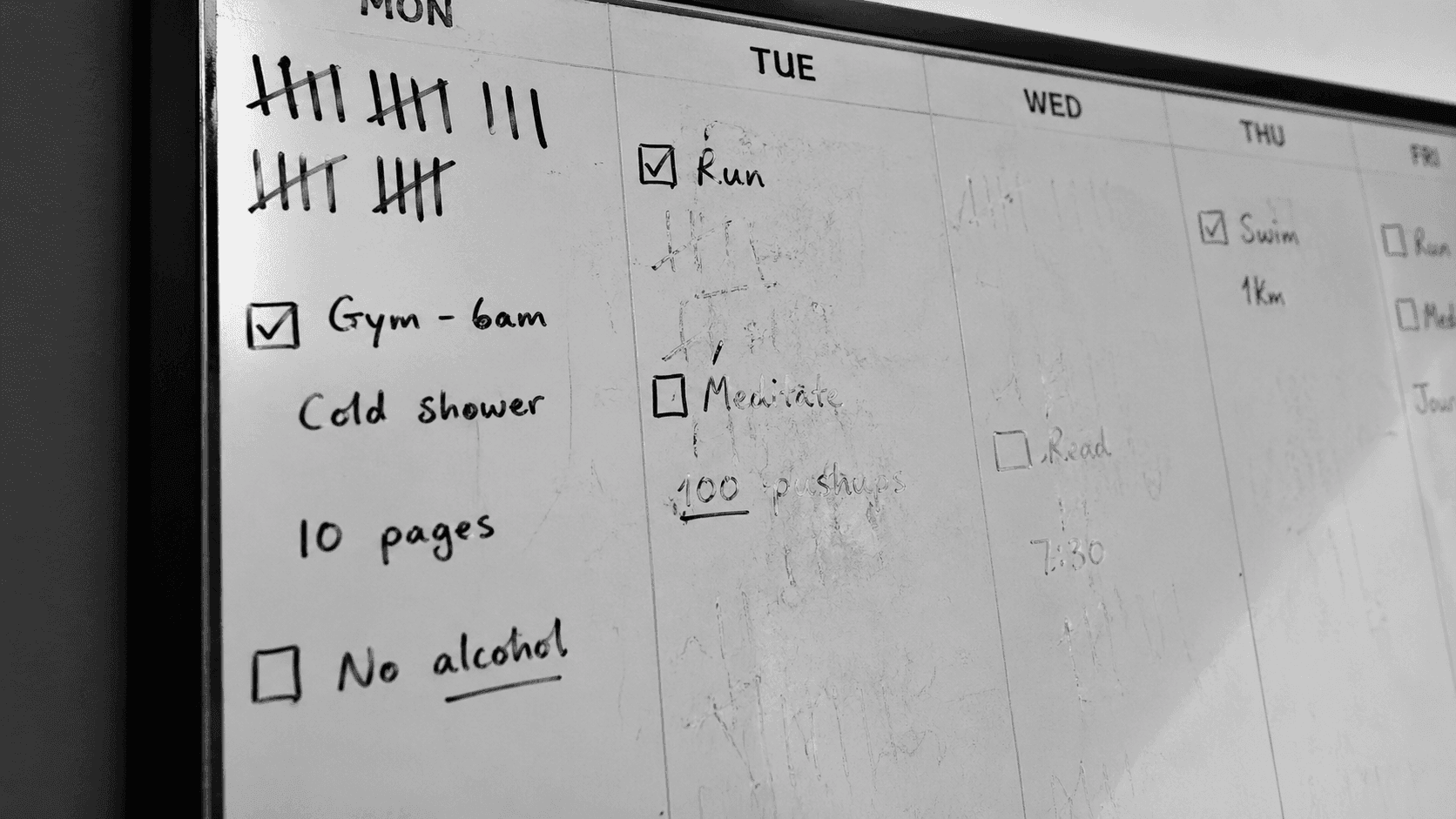
I used to track everything. Weight, sleep, workouts, revenue, reading, screen time, mood. I had spreadsheets going back years. None of it changed what I did.
The problem wasn't discipline. I was diligent. The problem was that I was accumulating data without a mechanism to act on it. The numbers piled up. I looked at them occasionally, felt vaguely informed, and carried on doing roughly what I would have done anyway.
It took me a long time to understand why. Tracking, on its own, is just record-keeping. It tells you what happened. It doesn't tell you whether what happened was the right thing, or what to do next. For that you need something else, and most personal tracking tools don't have it.
The missing layer is review
Review is the part everyone skips. You set up the spreadsheet, the app, the habit tracker. You log dutifully for a few weeks. Then you stop opening it, because nothing about logging forces you to confront whether any of it is working.
A weekly review is the smallest unit of accountability that actually works. Days are too granular. Months are too long. By the time you notice something has gone wrong, you've already lost four weeks. A week is enough time for signal to emerge and short enough that you can correct course before drift becomes habit.
But review only works if the things you're reviewing are connected. Reviewing a pile of disconnected numbers tells you nothing. You need a structure that makes the question "is this working?" answerable.
Tracking has to be aimed at something
The second mistake I made for years was tracking habits without a clear objective. I'd commit to working out five times a week, reading thirty minutes a day, getting to inbox zero. Some of these I was good at. None of them were tied to a specific outcome I was trying to reach.
This sounds fine until you notice what it does to your attention. You start optimising for the habit itself. The streak becomes the goal. You feel productive because you're consistent, but consistency at things that aren't moving you anywhere is just expensive motion.
Habits are leading behaviours. They're what you do because you believe they'll get you somewhere. If you can't name the somewhere, the habit has nothing to be accountable to. It survives on willpower until willpower runs out.
The fix is to start at the other end. Decide what you want to achieve. Define how you'll know you've arrived: a weight, a revenue figure, a race time, a completion percentage. Then work backwards to the behaviours you think will get you there. Now the habit has a job, and you have a way to tell, over time, whether it's doing it.
Four layers, one loop
What I've ended up with, after iterating on this for years, is a system with four parts that only works because they connect.
The first is the objective, with measurable key results and a timeframe. This is what you're actually trying to achieve, recorded weekly so you can see whether you're closing the gap.
The second is the plan, which has two distinct parts: actions and habits. They do different jobs and confusing them is one of the main reasons people's plans fall apart.
Actions are the things you'll do once. They're projects, milestones, or steps within a project. Launch the new pricing page. Finish the strength block before the race. Hire the second engineer. Each one has a definite end. You either complete it or you don't, and once it's done it's done.
Habits are recurring behaviours with a weekly target. Train five times a week. Write every weekday morning. Sleep before midnight. Habits don't complete. They accumulate, and their value comes from the accumulation. A habit you did for three weeks and dropped is worth almost nothing.
You need both. Actions move you in steps; habits compound underneath them. A plan made entirely of actions burns you out and ignores the conditions you need to sustain. A plan made entirely of habits leaves you consistent but never finishing anything specific. Both exist in service of the objective, not as ends in themselves.
The third is lead indicators. These are measures that tell you whether your plan is working before the outcome confirms it. A resting heart rate trending down tells you your fitness is improving weeks before you can run the 10k. Lead indicators are how you avoid finding out too late that your plan was wrong.
The fourth is the weekly review. You look at the objective data. You assess the habits. You check the lead indicators. You decide whether the plan needs to change. This is the part that turns the other three from a tracking system into a performance system.
Each layer needs the others. Objectives without a plan are wishes. Plans without lead indicators leave you flying blind for months. Habits without an objective are just behaviour. And all of it without review is just data collection.
What it actually does
The honest description of what this system does is unglamorous. It doesn't make me work harder. It doesn't generate motivation. What it does is make it harder to drift.
Drift is the real enemy. Most goals don't fail in a single moment. They erode quietly over weeks, while you stay busy and feel productive, until you look up one day and realise you've been moving in a slightly different direction than the one you chose. The review is what catches that early enough to do something about it.
This system is what rcordr is built around. The app doesn't quite support all of it yet, and some parts are further along than others, but the four layers are the shape it's taking.
I'm still refining the system. Some parts I'm more confident in than others, and the way I use it now isn't the way I used it two years ago. But the core has held: tracking has to be aimed at something, and review is what keeps the aim honest. Days make weeks, weeks make months. The review is where performance compounds, or falls apart.